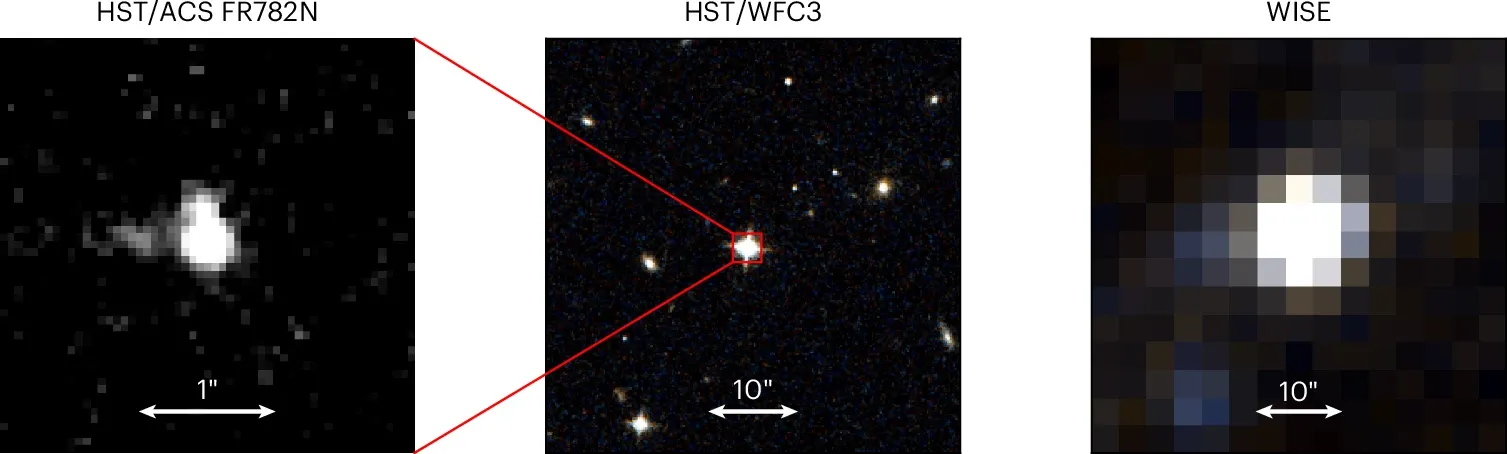
Columbia Assistant Professor of Astronomy Kishalay De is a co-author on a new study, published in Nature Astronomy, reporting the detection of the earliest known flickering quasar. The quasar's light originates from just 850 million years after the Big Bang, making it the earliest flickering quasar detected to date. De and collaborators at MIT and other institutions used archival infrared data from NASA's NEOWISE mission to identify the flicker and analyze the structure of the accretion disk around the central supermassive black hole. Surprisingly, the disk was found to be thin and flat, a structure typically associated with older, more mature black holes, deepening the mystery of how supermassive black holes can grow and settle so early in cosmic history. De noted that the NEOWISE data have opened an entirely new avenue for studying quasar variability in the early universe, setting a benchmark for large-scale studies that will be enabled by upcoming infrared survey telescopes.
Abstracted from Columbia news story here.