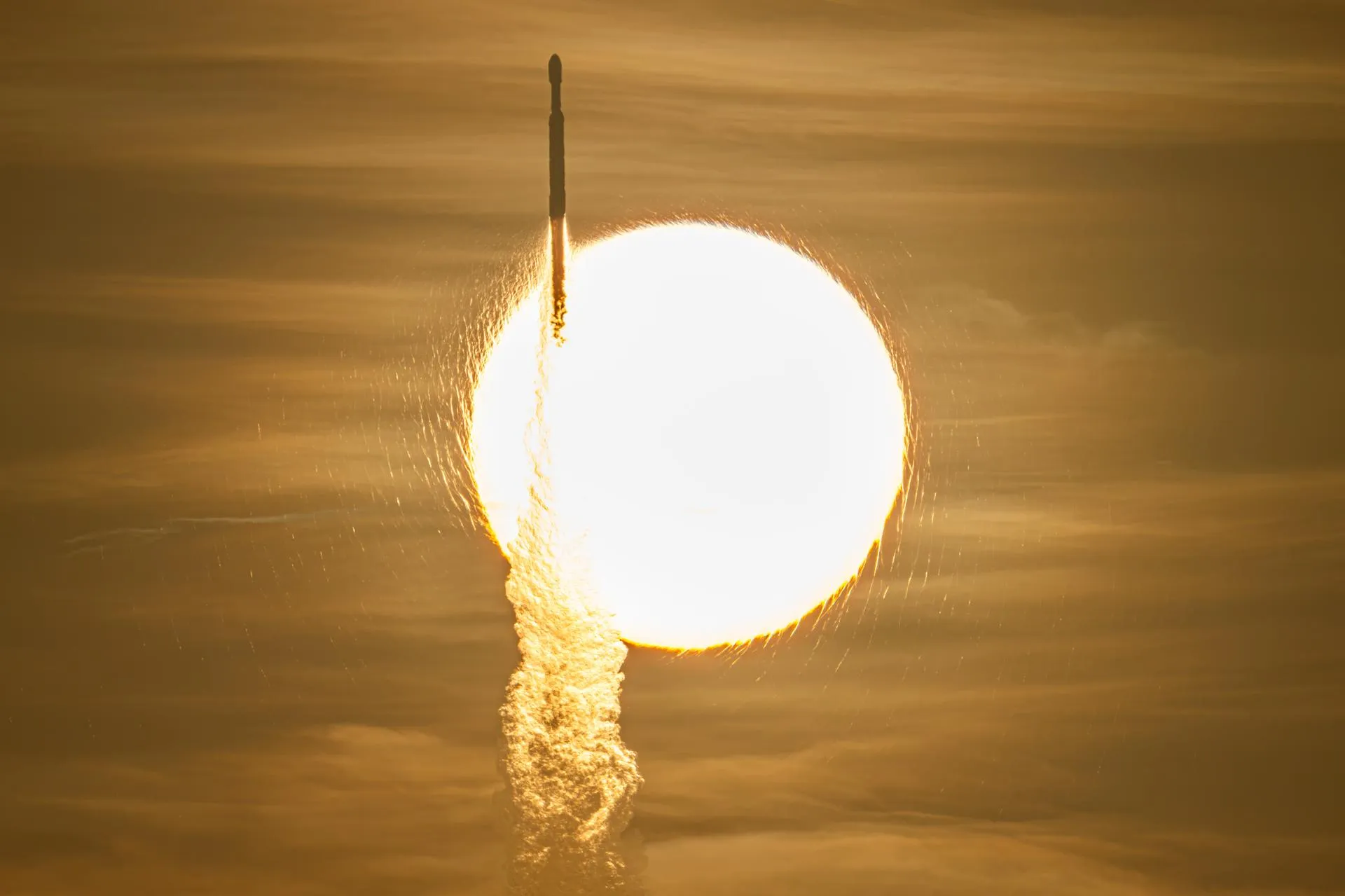
NASA's Nancy Grace Roman Space Telescope lifted off from Kennedy Space Center at 7:26 a.m. EDT on Sunday, August 30, aboard a SpaceX Falcon Heavy rocket. The NASA flagship observatory is now on a three-month journey to a vantage point about a million miles from Earth, where it will begin a five-year survey of the sky.
Kishalay De, Assistant Professor of Astronomy, is the inaugural chair and current co-chair of the Explosive Transients group of the Roman Science Collaboration, and a member of the Roman Science Users Panel.
De also served on the twelve-member community committee that designed Roman's Galactic Plane Survey, the first of the mission's General Astrophysics Surveys to be defined through a community-led process. The survey the committee delivered will map 691 square degrees of the Milky Way in Roman's first two years, yielding a catalog of roughly 20 billion sources and the highest-resolution panoramic view of the Galaxy ever obtained, with 130 hours reserved for repeat observations of six subregions on cadences from about 11 minutes to weeks.
He is now principal investigator of the Roman Galactic Variability Project, a Columbia-led effort funded under Roman's Wide-Field Science program to build the tools that will turn that data into discoveries. His team is developing software that combines Roman's infrared resolution with real-time alerts from ground-based surveys such as the Rubin Observatory to identify the progenitor stars of Galactic explosions, along with image-subtraction algorithms designed for the extremely crowded fields where standard transient-detection methods break down.
"The algorithms that find transients were built for empty sky," De said. "If we want Roman's Galactic discoveries in the first two years, the tools have to be ready before the data arrives so we can find the most exciting objects as they happen."
Roman now enters roughly three months of commissioning, with NASA anticipating first images by early 2027. De's group will validate its codes on archival data in the meantime, then release them to Roman's Software Teams and the wider community.